 Built for Indian small businesses
 Covers registration, returns, ITC & audits
 Created by FlexiLoans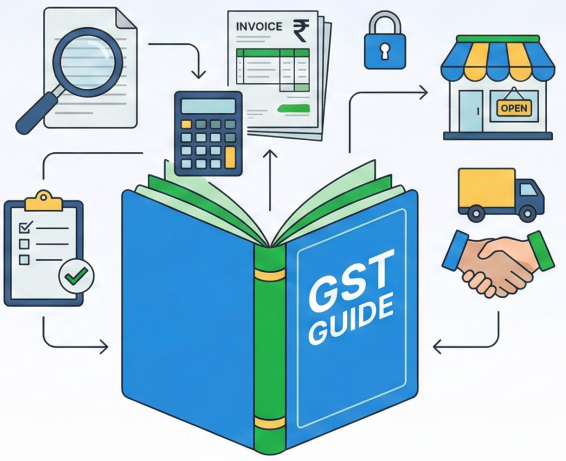
Why Most GST Problems Start With
Documents (Not Tax Rates)
GST compliance usually doesn’t break down due to high tax rates. It breaks down because of small documentation gaps that quietly accumulate over time. These issues often show up much later as penalties, GST notices, blocked credits, or uncomfortable questions during audits and loan applications.

A single missing invoice can trigger compliance chain reactions.

Discrepancies in Input Tax Credit leading to blocked funds.

Vendors failing to file on time affecting your score.

Small errors leading to notices and penalties later.
If you have ever felt unsure about:
 Which documents are actually required for GST registration?
- How to respond to a GST notice?
- Whether your invoices are GST-compliant?
- What do lenders look for in GST records?
- Why does ITC get blocked even after paying vendors?
 This guide shows you how to keep your GST records clean, consistent, and loan-ready.
What You’ll Get Inside This GST Guide
This guide breaks GST documentation into simple, manageable parts, so you always know what to keep, when to file, and how to stay compliant.
 Registration Checklist
A complete checklist of documents needed for GST registration.
 Invoice Formats
GST-compliant invoice formats and daily documentation basics.
 GSTR Filing Docs
Precise documentation requirements for GSTR-1, GSTR-3B, and GSTR-9.
 Payments & Challans
How GST payments and challans actually work.
 Claiming ITC
What documents are needed to claim and protect your ITC?
 Vendor Compliance
How to verify GSTINs and track vendor compliance.
 Loan Readiness
GST documents commonly reviewed during business loan evaluation.
 Audits & Notices
Simple checklists for audits and GST notice responses.
Who Should Read This Guide?
This guide is handy if you are:
 Small & medium business owners
 Service providers & traders
 E-commerce sellers
 Manufacturers & wholesalers
 Businesses planning GST registration
How does this guide help?
With the proper GST documentation in place, you can:
 Avoid Penalties Reduce the risk of penalties and GST notices.
 Audit Ready Keep your records audit-ready throughout the year.
 Improve Cash Flow Improve ITC accuracy and cash flow visibility.
 Stronger Loan Profile Present a stronger, cleaner profile during a loan application.
"Good GST records are not just about compliance. They support better financial decisions."
Why Trust FlexiLoans?
FlexiLoans works closely with Indian MSMEs and understands how GST compliance directly affects business funding. Over time, we have seen how clean GST records make a real difference during credit evaluation.
This guide is designed to help businesses stay compliant, organised, and financially ready, not just tax-compliant.
 Trusted by thousands of Indian businesses
Download the Free GST Guide
Get instant access to a practical GST handbook built for real businesses.
Helpful GST Tools & Resources


Frequently asked questions on GST compliance and documentation
Need Funding That Matches Your GST Profile?
If you’re GST-registered and looking for working capital or business expansion funding, FlexiLoans offers tailored business loan solutions backed by GST data.